
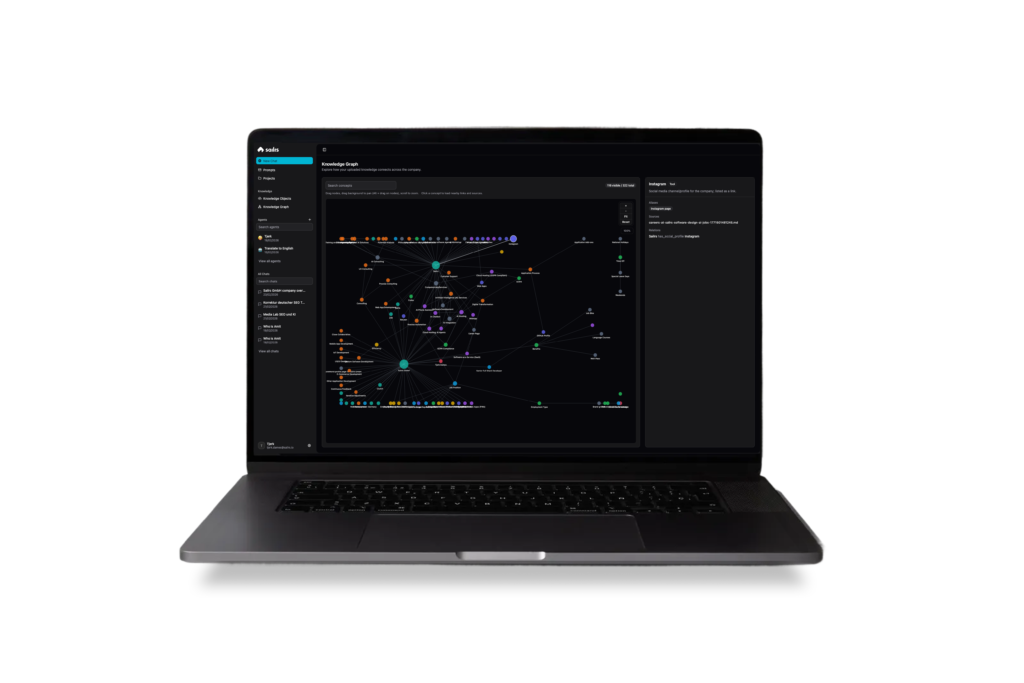


When a mid-sized manufacturer hired an external data scientist, they expected a single model to solve a single problem. Instead they received a stack of incompatible tools, slow handoffs, and rising costs. That experience is why many organizations are now asking for one truth: one platform that houses every model they need.
Why one tool for all AI models matters
Managing multiple AI models across vendors leads to fragmented data flow, inconsistent governance and slow time-to-value. Consolidating models into a single platform — often offered as a KI Betriebsystem (SaaS) — reduces friction. It centralizes monitoring, simplifies deployment and makes model reuse practical.
What “All AI Models in One Tool” means
“All models in one tool” doesn’t imply a single algorithm that fits every use case. It refers to a platform that:

- Integrates diverse model families (NLP, vision, retrieval, prediction).
- Supports third-party and custom models in a unified runtime.
- Provides centralized datasets, versioning, and monitoring.
- Delivers SaaS convenience while letting teams orchestrate models together.
Benefits for the Mittelstand (midmarket)
- Faster deployment: Shared pipelines and templates cut time from pilot to production.
- Predictable costs: Consolidated licensing and cloud usage are easier to budget.
- Operational resilience: Single-source observability reduces downtime risk.
Why marketing and software agencies gain most
Agencies juggle multiple client requirements and tight timelines. A platform that hosts many models expedites campaign personalization, creative generation, and automated reporting. For software agencies, the same platform enables productizing AI features without reinventing integration or monitoring stacks for each client.
How a KI Betriebsystem (SaaS) delivers value
A KI Betriebsystem (SaaS) typically combines model orchestration, dataset management and governance into one service. Key capabilities to look for:
- Model registry and version control
- Unified API gateway for multiple models
- Experiment tracking and performance dashboards
- Access controls and audit logs
Implementation roadmap: pilot to scale
- Start with a focused pilot: pick one business problem, two complementary models, and measure impact.
- Standardize data and interfaces: create shared schemas and APIs so models can interoperate.
- Automate monitoring: set SLOs, drift detection and alerting before full rollout.
- Scale incrementally: bring more teams and use cases onto the platform once the pilot proves ROI.
Security, governance and vendor checklist
When evaluating vendors, confirm:
- Data residency and encryption policies
- Role-based access and audit trails
- Support for explainability and bias detection
- SLAs and multi-region failover options
Cost expectations and ROI considerations
Costs depend on model types, compute needs and data throughput. Expect initial pilot costs for integration and tooling, then predictable subscription and usage fees. Calculate ROI from time saved in deployment, reduced vendor management, and faster feature delivery to customers.
Real-world story: a 90-day transformation
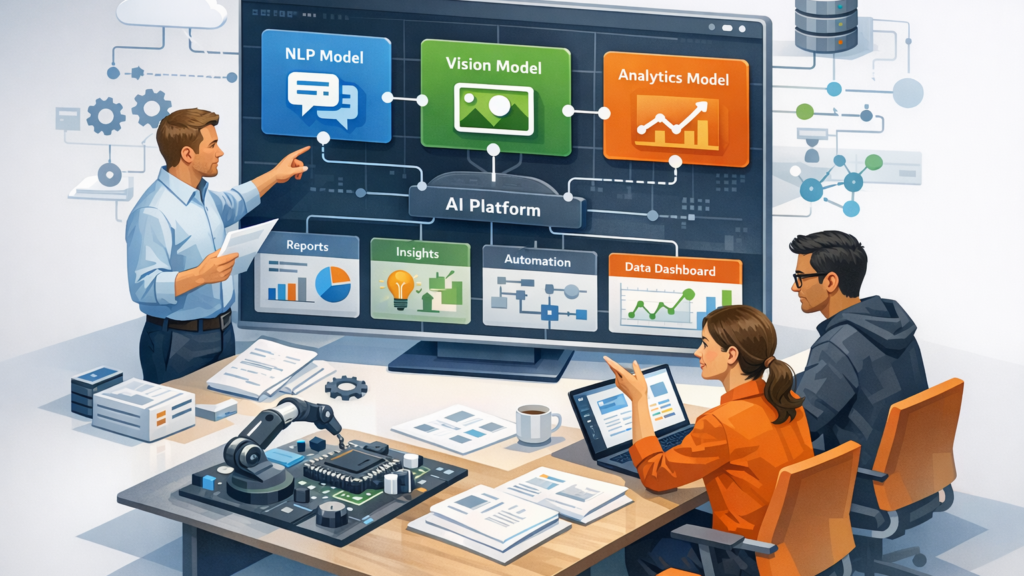
One marketing agency used a focused 90-day plan to consolidate its creative, personalization and analytics models into a single platform. The result: faster campaign launches and a centralized reporting set that made campaign optimization weekly instead of monthly. If you want a structured path like this, consider a guided plan tailored to midmarket and agencies — for an example plan, see our 90-day AI plan for Mittelstand, marketing and software agencies.
Next steps
If your organization struggles with multiple AI tools, start with a short internal audit: list models, owners, data sources and pain points. Then run a small pilot on a KI Betriebsystem (SaaS) that supports the models you need. For hands-on support, request a consultation to design a prioritized 90-day plan.